Project Spotlight: Floriana Villa– Elevating Aesthetics & Durability
2025/11/17

I. Project Overview
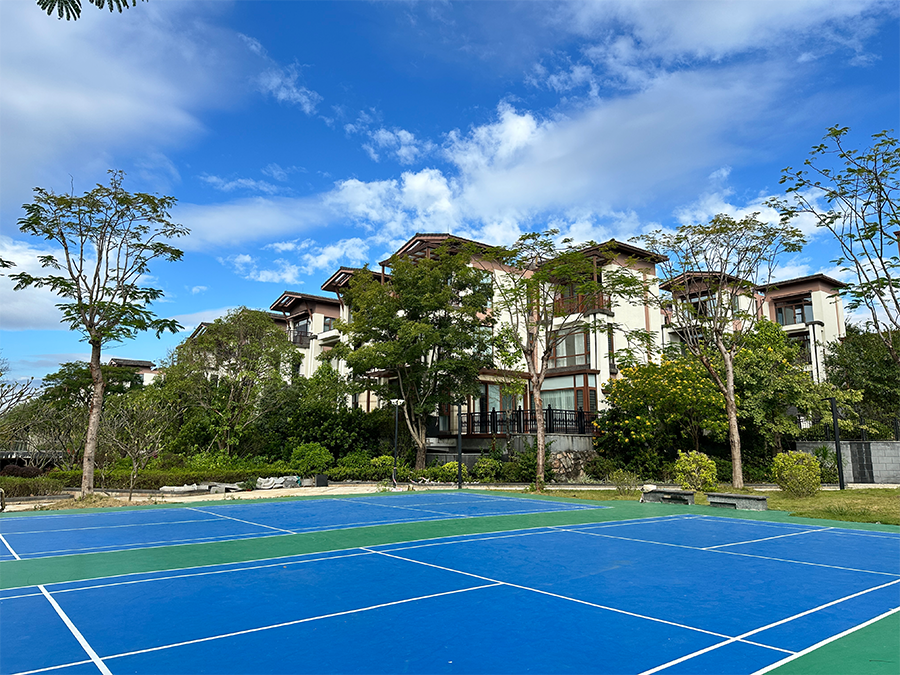
Furong Villa is located in Furongzhang Resort Area, Shiling Town, Huadu District, Guangzhou. Covering a total area of approximately 220,000 square meters with a plot ratio of only 0.6 and a greening rate of 41.4%, it is a high-end villa complex with a Southeast Asian style developed by Sino-Ocean Group. Backed by the 3,200-hectare Wangzishan Forest Park and facing the 3 million square meter Furongzhang Reservoir, the project boasts a superior ecological environment and is positioned as a "model of low-density living in a lakeside and mountain retreat." Its townhouse complex blends modern simplicity with natural elements, and the exterior design, balancing durability and visual depth, provides a typical scenario for the application of a coating system.
II. Material Combination Scheme
The project employs a layered design, achieving a balance between function and aesthetics through a combination of three types of paint:
1. Top layer: Coffee-colored elastic flat coating
Key features: high elasticity (elongation at break ≥200%), weather resistance (no discoloration after ≥500 hours of accelerated aging test), good breathability, and effective coverage of minor cracks in the base layer.
Functional value: As the outermost decorative layer, the coffee color contrasts with the surrounding natural landscape, while its elastic properties adapt to the deformation of the wall in the hot and humid climate of the south.
2. Middle layer: Light beige textured sandblasted paint
Process characteristics: It adopts the "double-layer scraping + sanding texture" process, with sand particle size of 0.3-1.5mm, and uses a special scrubbing board to create a natural sand texture.
Advantages: The light beige tone is soft and has a rich texture, enhancing the three-dimensionality of the building while improving the coating's stain resistance.
3. Base coat: Grayish-beige water-based sand-textured paint
Material characteristics: Contains natural colored sand (simulation degree ≥90%), has excellent waterproof (water resistance ≥96 hours) and crack resistance, and dry film thickness ≥1.5mm.
Structural function: As a base protective layer, the gray-beige color forms a transition with the upper layer color, and the water-coated sand process simulates the effect of stone, enhancing the overall texture of the building.

III. Detailed Explanation of Construction Technology
1. Grassroots processing
The process of "inspection-repair-leveling" is adopted. The moisture content of the base layer is ≤10%, the flatness deviation is ≤3mm (measured with a 2m straightedge), and when the crack width is >0.3mm, a V-groove is opened and filled with elastic sealant.
Special areas (such as inside and outside corners) are rounded (R≥50mm) to avoid stress concentration that could cause the coating to crack.
2. Layered construction
Primer: Apply alkali-resistant sealing primer by roller, using 0.15 kg/m², and allow it to dry for ≥4 hours to ensure that the substrate is sealed without any missed areas.
Intermediate coat: Apply the textured sandblasted paint in two coats. The first coat is thin (1-2mm), and the second coat is sandblasted (1.5-2mm). Use the "cross-hatching method" to ensure a uniform texture.
Topcoat: Water-based sand coating is applied using airless spraying with pressure controlled at 0.4-0.6MPa and nozzle distance from the wall 40-60cm to ensure uniform sand particle distribution.
3. Quality Control
After each process, the coating thickness is tested (primer ≥30μm, intermediate coat ≥60μm, topcoat ≥100μm), and the adhesion is ≥0.4MPa (cross-cut test).
Color difference is strictly controlled. The same batch of paint is used on the same wall surface, and the construction interval is ≤2 hours to ensure color consistency.
IV. Panoramic View Display
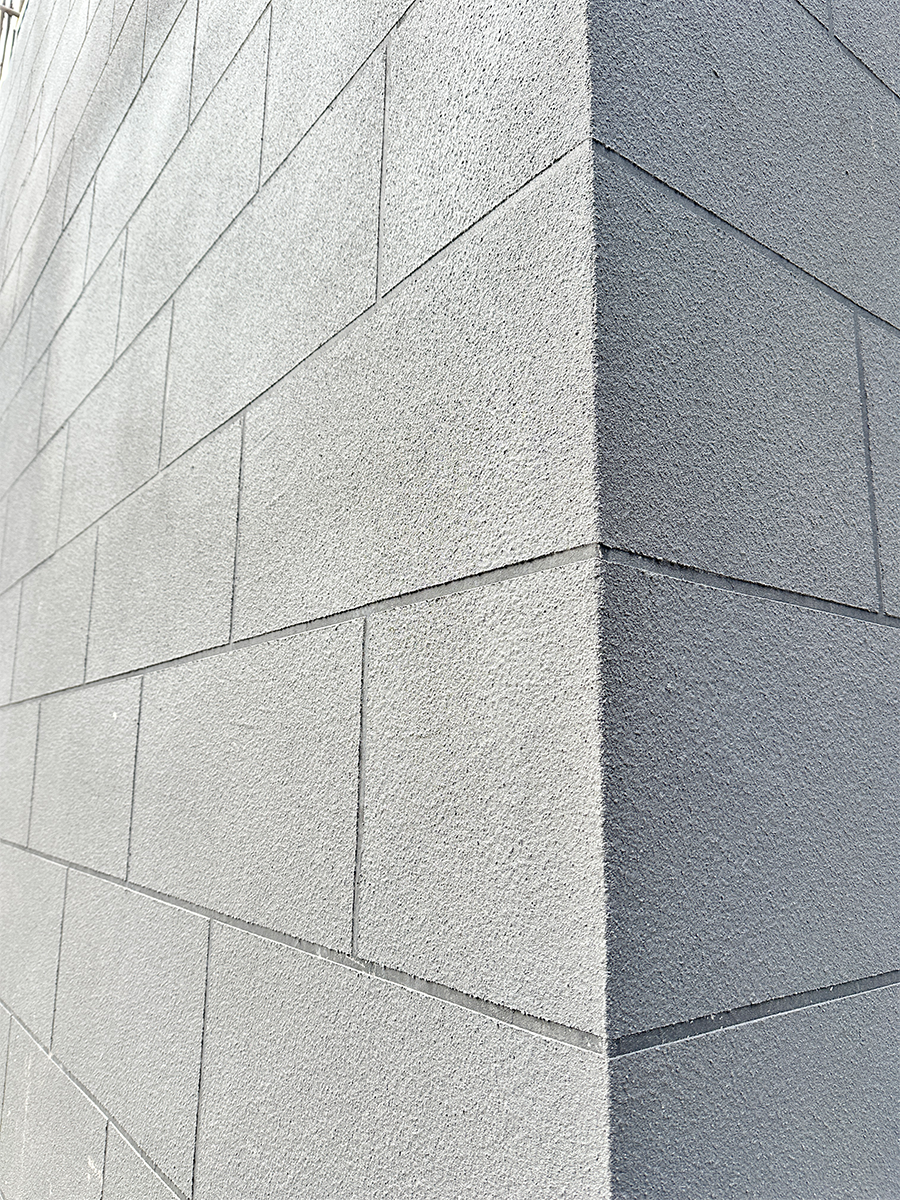
Overall visual effect: The coffee-colored elastic flat coating and the light beige textured sandblasted finish create a visual balance of "light on top and heavy on the bottom". The bottom layer of gray beige water-based sand simulates a stone base, enhancing the sense of stability of the building.
Details: The natural texture of the textured sandblasted layer contrasts with the granular texture of the water-based sand, creating rich light and shadow variations under sunlight, especially on the facade lines of the townhouses, where the sense of layering is prominent.
Environmental integration: The color scheme harmonizes with the surrounding lake and mountain landscape, with coffee brown complementing the green vegetation and light beige echoing the sky and water, enhancing the integration of the building with nature.

V. Core Advantages of Source Manufacturers
As a source manufacturer of architectural decorative coatings, the following core competencies were demonstrated during the project implementation:
1. Material customization capability: We develop special formulas based on the climate characteristics of the project (high temperature and high humidity), such as adding nano-silicon microcapsule technology to elastic coatings, which achieves a UV reflectivity of 92% and improves color retention by 20%.
2. Construction Service System: We provide integrated solutions for "materials + construction", with a 100% certified professional construction team. Regular products are delivered within 48 hours, and there is a one-year free inspection after project completion.
3. Cost control advantages: Through a regionalized production network (such as its own factory in Guangdong), it achieves a 200-kilometer radius coverage, shortens the delivery cycle of small and medium-sized projects to 7 days, and reduces material costs by 10%-15% compared to similar competing products.
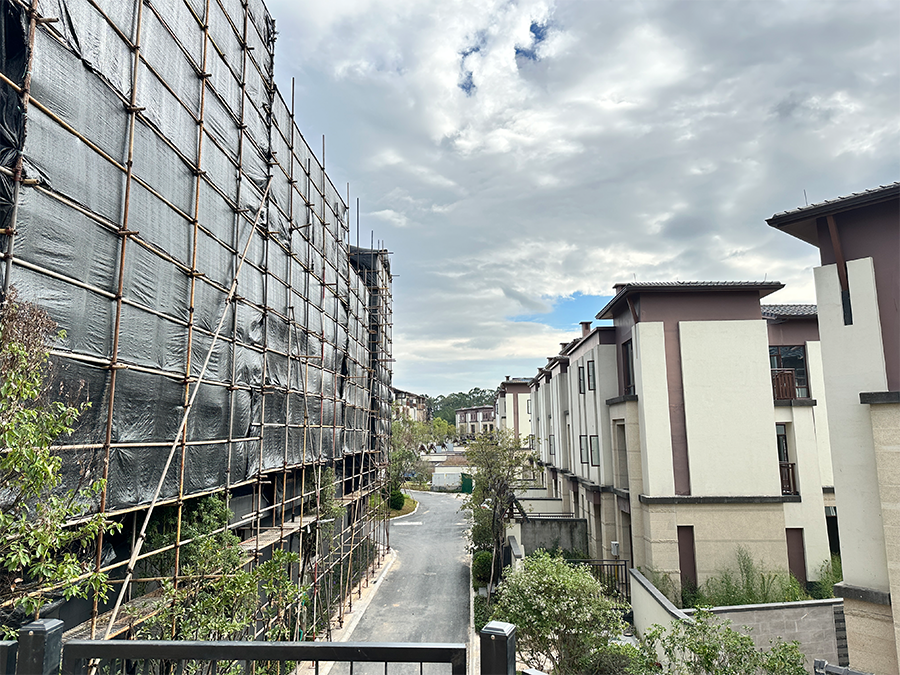
Through material innovation and process optimization, this project not only achieved a balance between architectural aesthetics and functional requirements, but also demonstrated the comprehensive advantages of the original manufacturer in material customization, construction services and cost control.